 Thinkdown
A weekly review you can do out loud
A weekly review is ten minutes to look back at the week and decide what matters next. Here's a version you talk through instead of filling in: look at your week first, answer five questions out loud, and keep the written result.
The template is short: two minutes looking back at what you actually did, then five questions you answer out loud. What happened, what went well, what's stuck, what you said you'd do, and the one thing for next week. You end up with a short written review instead of a half-filled form, and it takes about ten minutes. The rest of this piece explains why each part is there and how to keep doing it.
Why do most people give up on weekly reviews?
Weekly reviews come with a reputation: a checklist, a quiet desk, an hour on Sunday afternoon. Most people try it for two or three weeks and stop. The reasons are usually the same:
- It looks like homework. A template with eleven boxes is a lot to face at the end of a long week.
- Typing slows you down. You start editing your sentences instead of thinking about your week.
- A bad week makes it worse. The weeks you most need a review are the ones you least want to write one.
Why does doing it out loud work better?
Talking is faster than typing, and it's more honest. When you're typing, you tidy. When you're talking, you say “honestly, Wednesday was a mess” and keep going. That sentence is often the most useful thing in the review.
It's also portable. You can do it on a walk, in the car before you go inside, or while the kettle boils. No desk needed.
Look before you talk: the two-minute look-back
This is the step most weekly review templates leave out, and it's the one that makes the rest work.
If you start talking cold, you'll talk about Thursday and Friday. That's what's fresh. Monday and Tuesday are already gone, and so is whatever went well on them. So before you record anything, spend two minutes looking:
- Your calendar. What was on each day? Which days were empty?
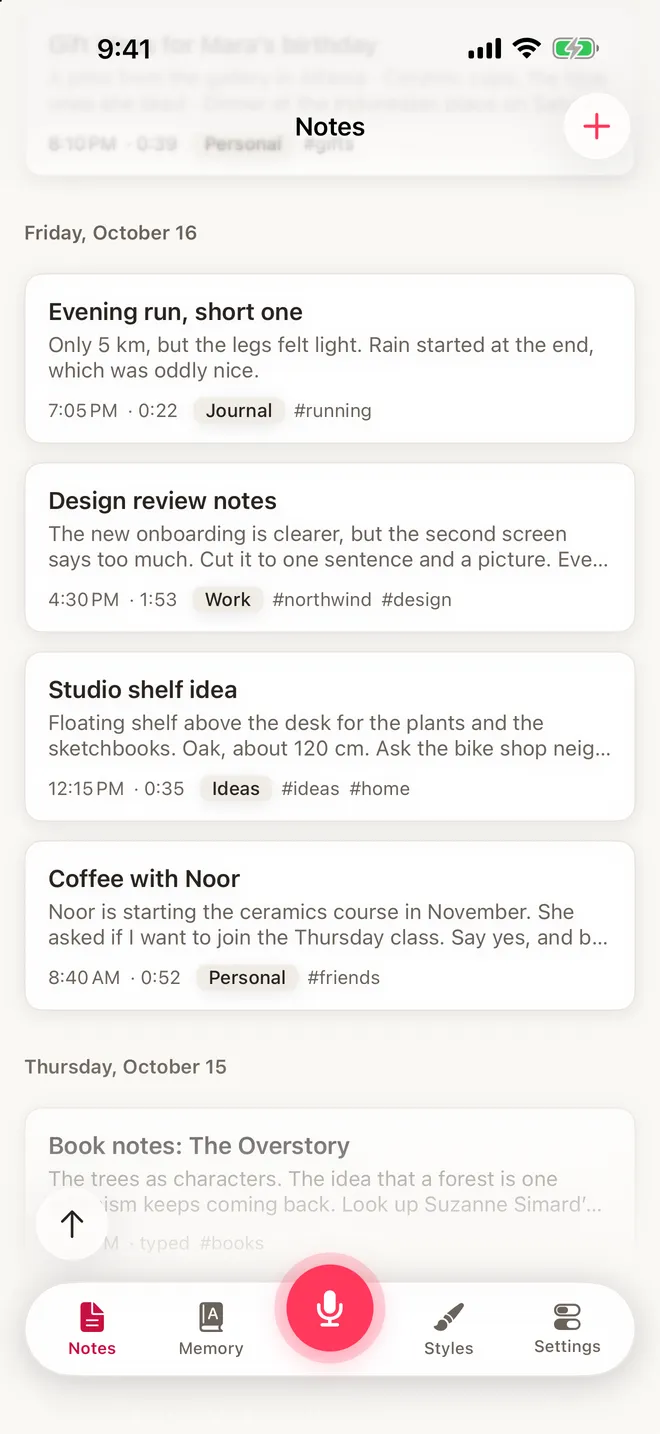
- Your notes from the week. Just the titles. They're the best reminder of what was on your mind.
- Your open to-dos. What's still unticked from last week?
Then put the phone down and talk.
The weekly review template: five questions
Answer them in order. A minute or two each. Skip one if there's nothing to say.
1. What actually happened this week?
Facts first. The meetings, the work, the people, the thing that took longer than it should have. Don't judge it yet.
2. What went well?
Say at least one thing, even in a bad week. It's not about being positive. It's that the good things are the ones you forget first, and the ones you most want to repeat.
3. What's stuck, and why?
Name the thing you keep not doing. Then say why, out loud. “I keep putting off the invoice because I don't know what to charge” is a problem you can solve. “Invoice, still not done” isn't.
4. What did I say I'd do?
Go through last week's one thing and any open to-dos. Done, dropped, or carried over. Dropping something on purpose counts as progress.
5. What's the one thing for next week?
One. If you name five, none of them is the priority. You can list other tasks, but end on the one that matters most.
What does a spoken weekly review sound like?
Here's a made-up review from Bettina, a freelance illustrator, recorded on a Sunday walk:
“okay, weekly review. so, um, this week was mostly the Lark and Fen book cover, three rounds of sketches. it went well actually, Odile liked round two, no, round three. what's stuck is the invoice for the Hartwell poster, I keep not sending it because I don't know whether to charge for the extra revisions. last week I said I'd update my portfolio and I didn't, I'm just going to drop that for now. next week, the one thing is finishing the cover by Thursday.”
A week of cover sketches
Most of this week was the Larkfen book cover: three rounds of sketches. It went well. Odile liked round three.
I keep not sending the invoice for the Hartwell poster because I don't know whether to charge for the extra revisions. I'm dropping the portfolio update for now.
Next week: finish the cover by Thursday.
- Decide on revision fees and send the Hartwell invoice
The stuck invoice turned into a to-do with the actual decision in it: decide on revision fees. That's the difference between a review that just records the week and one that changes next week.
How do you keep doing it every week?
- Attach it to something you already do. The Sunday walk, the Friday commute home, the first coffee on Monday. Same slot every week.
- Have a one-minute version. For bad or busy weeks: just question 5. One thing for next week. That keeps the habit alive.
- Reread last week's review first. It takes fifteen seconds and it makes question 4 honest.
- Count the weeks, gently. A visible streak helps. Missing one week isn't failure. Missing three usually means the template is too long.
- Look back once a month. Four short reviews read together show patterns a single week can't, like the invoice that's been “stuck” for a month.
Doing it with Thinkdown
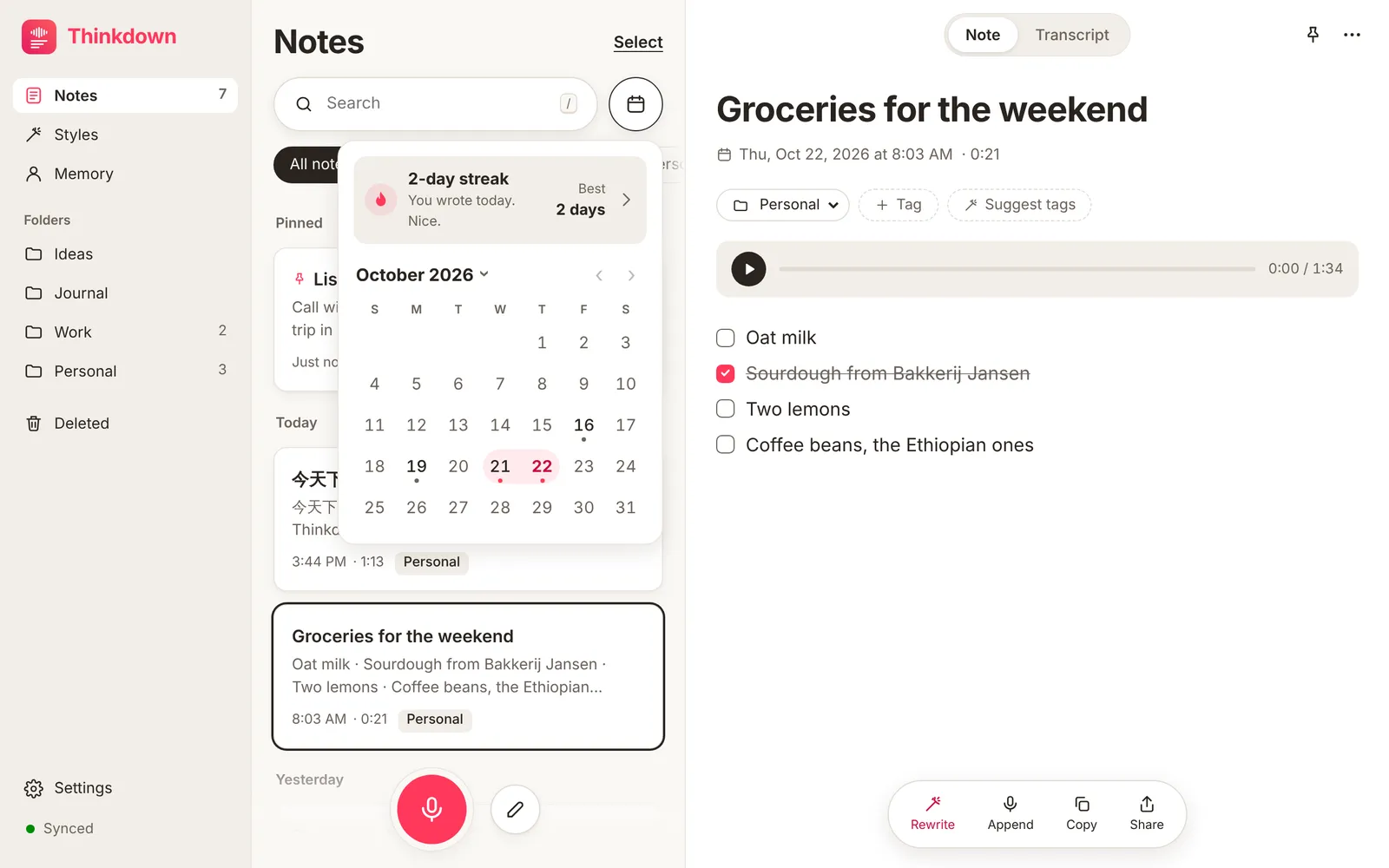
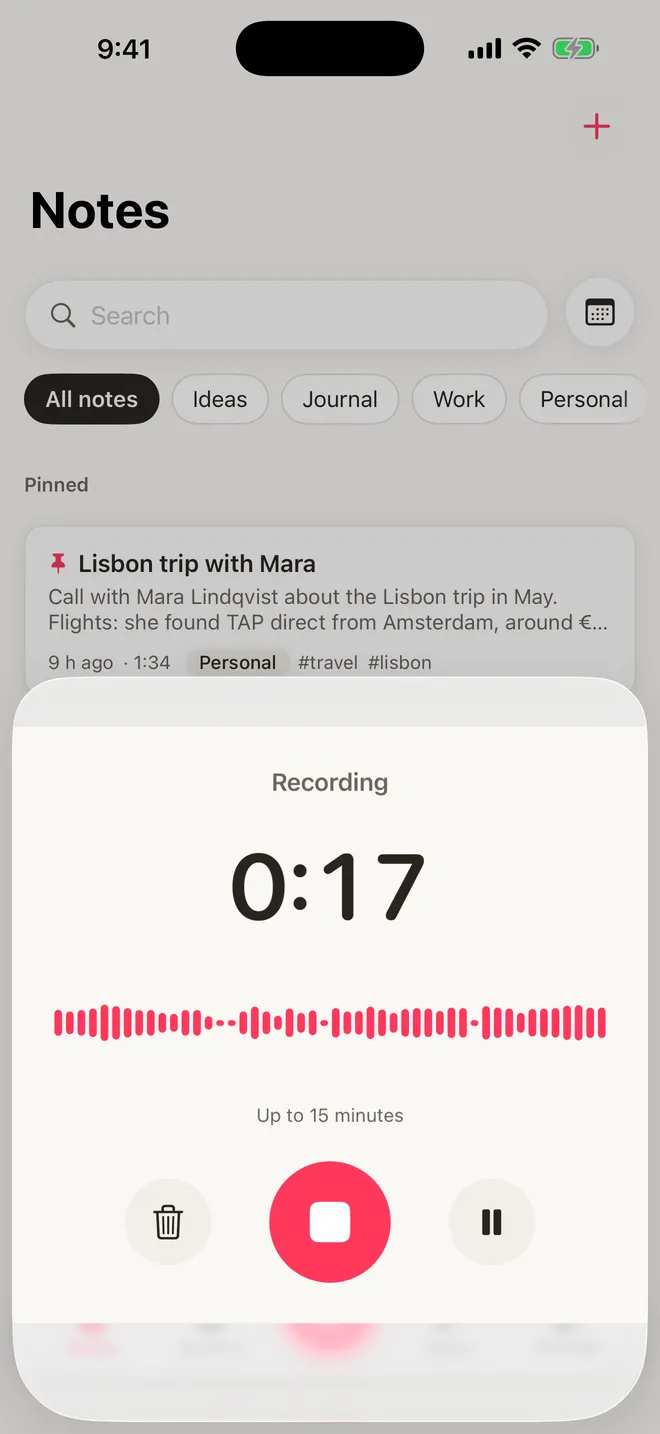
In Thinkdown, the calendar marks every day you recorded something, so the look-back is a glance: tap a day to see its notes. The streak counts the days in a row.
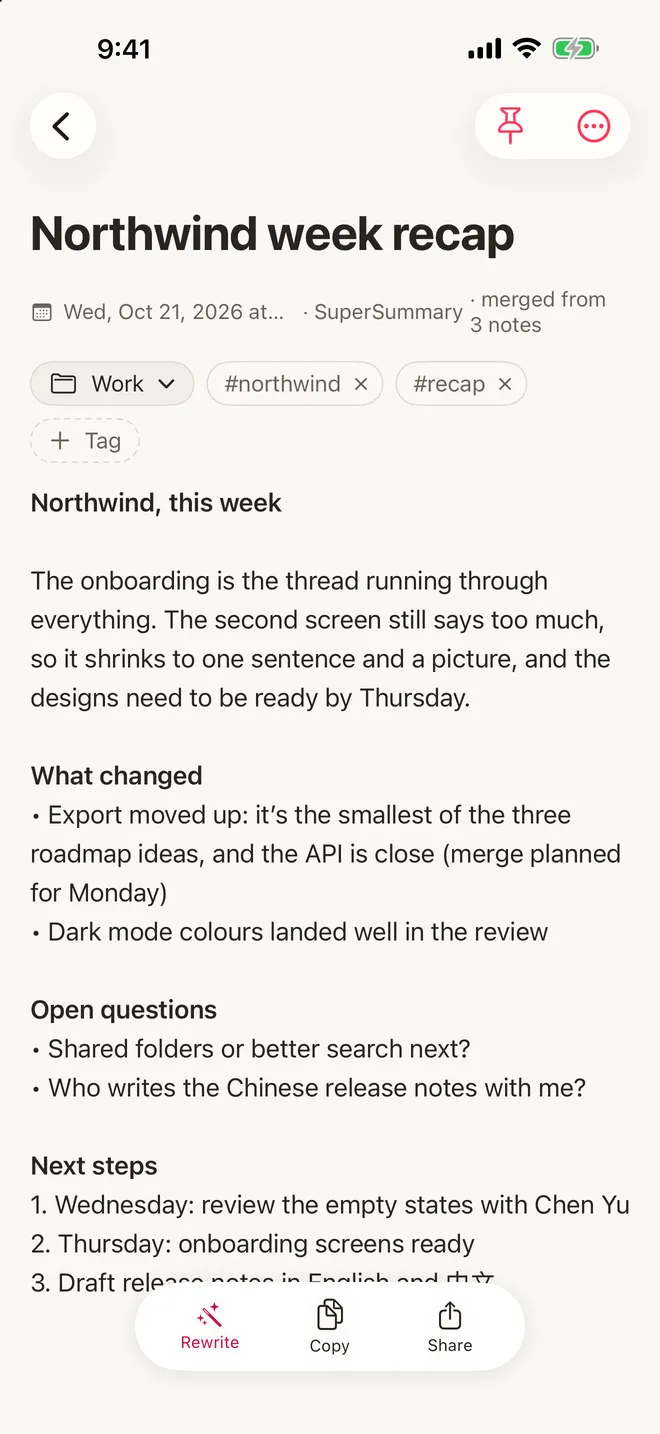
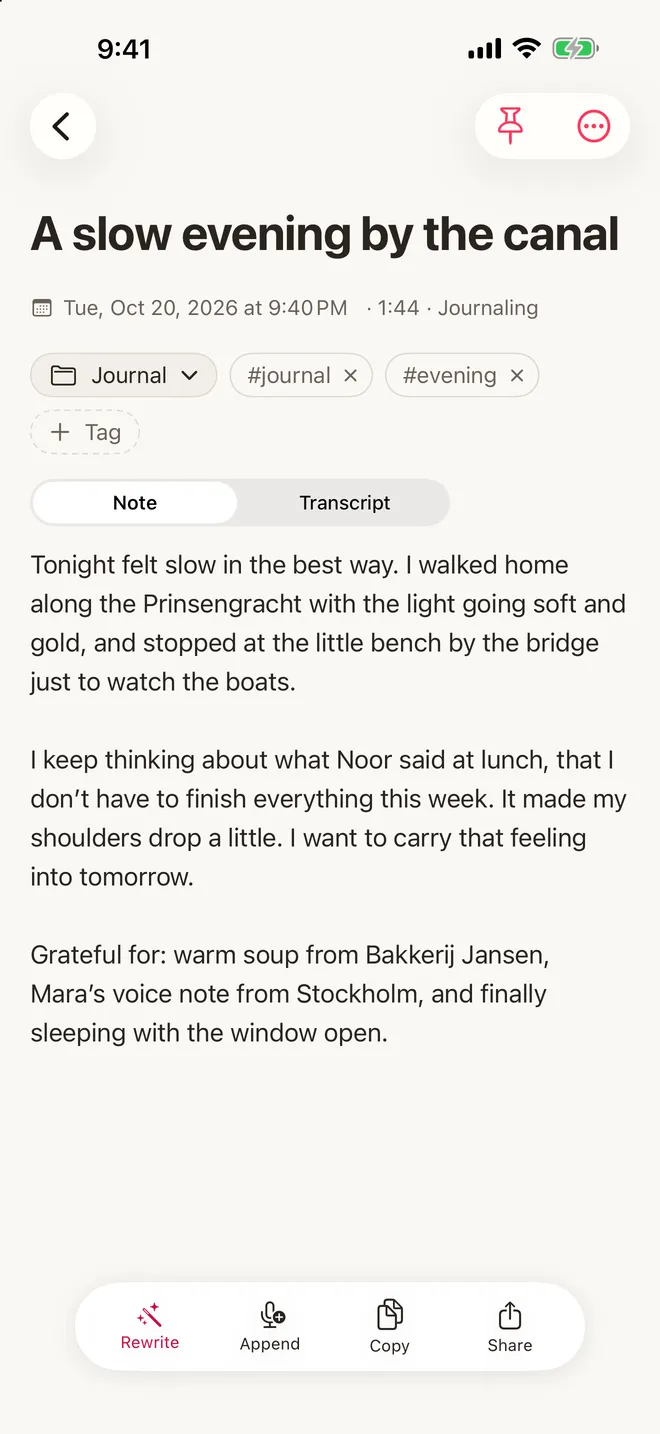
Record the review in any style. Journaling keeps it in your own first-person voice; List gives you headings and a checklist. Things you say you need to do become to-dos you can tick off. At the end of the month, select your four reviews and combine them into one note with the threads, what changed and what's still open.