 Thinkdown
Thinking out loud: why talking helps you think
You've probably solved a problem halfway through explaining it to someone. That isn't luck. Talking forces a vague thought into words, and words have to go in order. Here's why it works, and how to make it a habit.
The “explain it to a friend” effect
Programmers have a name for this: rubber duck debugging. You explain your broken code, line by line, to a rubber duck on your desk. Somewhere in the middle, you see the bug.
The duck does nothing. The explaining does everything.
Learning researchers have seen something similar for decades. People who explain material to themselves as they study tend to understand it better than people who just reread it. Saying “this step works because…” makes you notice when you can't finish the sentence.
Why talking helps
- It slows you down just enough. Thoughts in your head jump around. Speech has to go one word at a time, so you put ideas in order.
- It shows the gaps. In your head, “and then it'll just work” feels fine. Out loud, you hear how thin it is.
- It's faster than writing. Most people talk three or four times faster than they type. You get more of the thought out before it fades.
- It feels less final. A blank page asks for good sentences. Talking lets you be messy, which is where most ideas start.
- May is cheaper
- But Ana can't come in May
- So, June
When it helps most
- Stuck decisions. Say both options out loud, with the reasons. One usually sounds weaker.
- Planning a hard conversation. Rehearse what you'll say. You'll find the sentence that doesn't land.
- Writing anything. Talk through what you want to say before you write it. The draft gets easier.
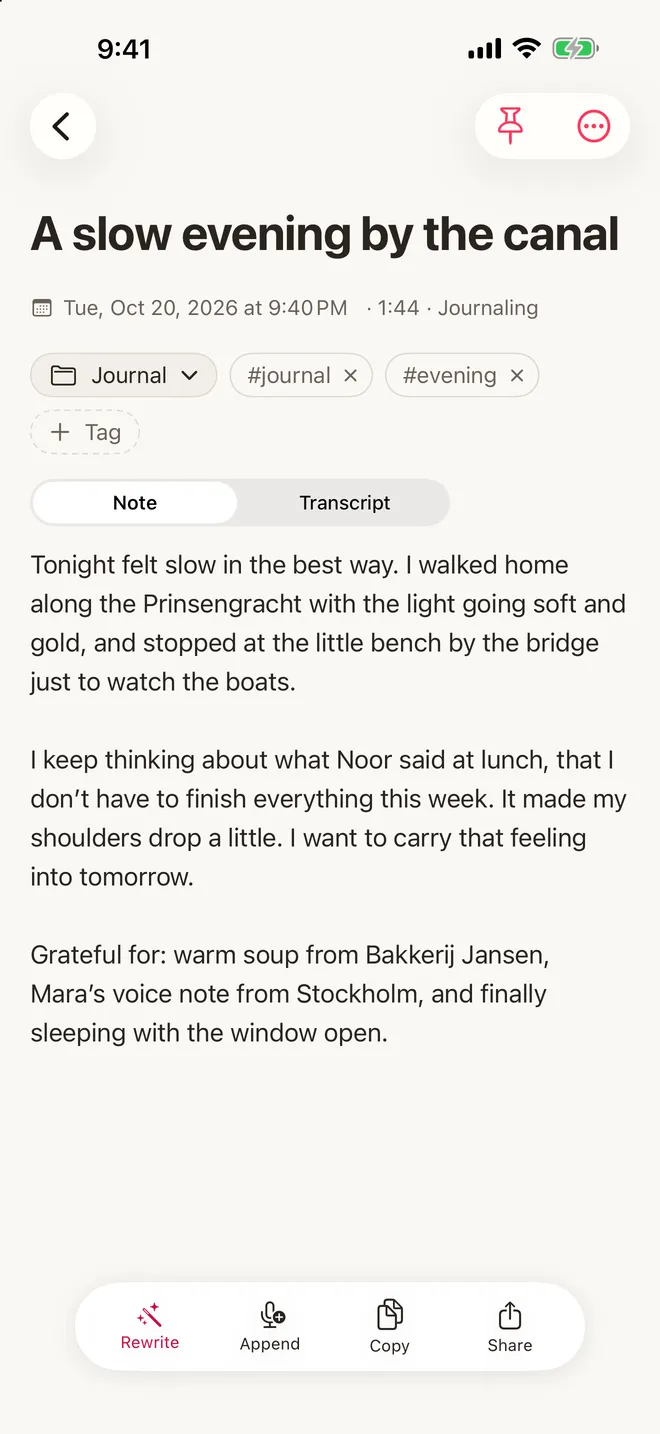
- End of the day. Saying what happened, and what's still on your mind, helps you put it down.
- Walks. Moving and talking go well together. Many people think best away from a desk.
The catch: talking is easy to lose
Out loud, you might reach a great answer in three minutes. Ten minutes later you remember that you figured something out, but not what.
Thinking out loud only pays off if the conclusion survives. That means capturing it somehow, without stopping the flow to write.
A five-minute habit
- Pick one question. Not “my life”, but “should I take the Lisbon trip in May or June?”
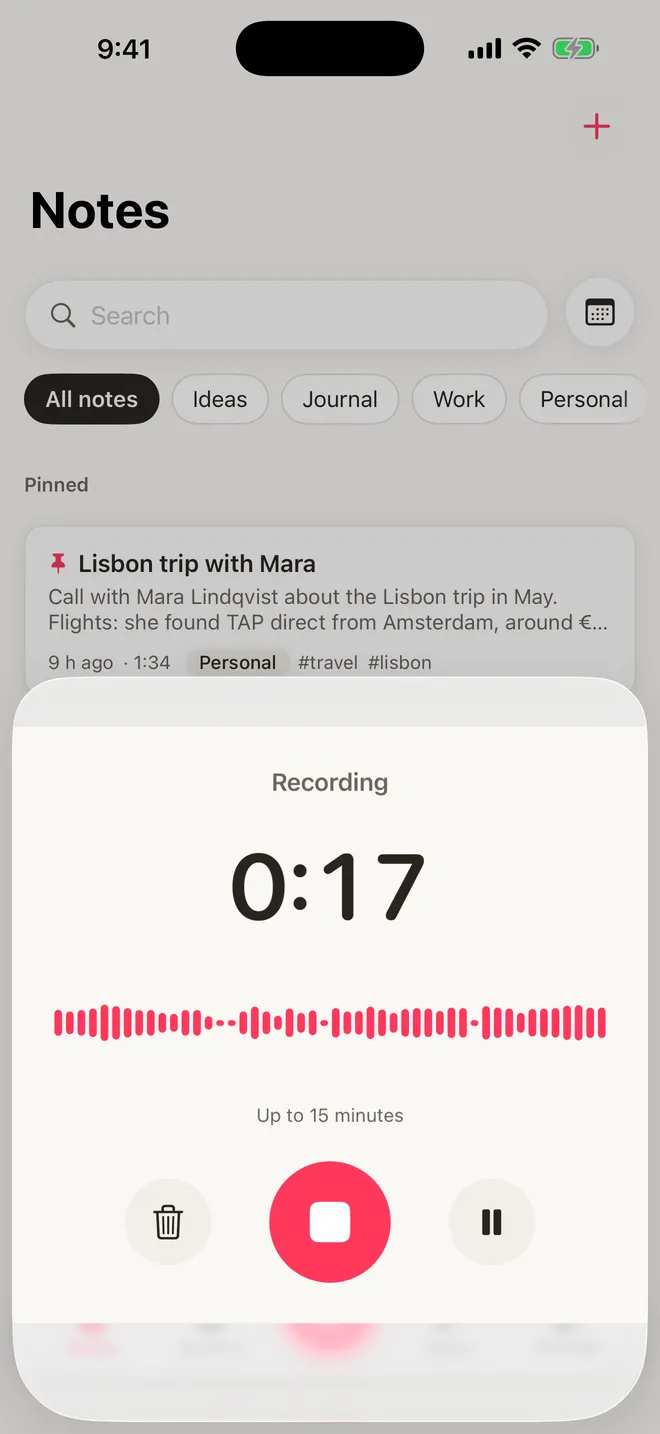
- Talk for three minutes. Record yourself. Don't aim for good sentences. Correct yourself as you go.
- End with “so…”. Finish with one line: “So, June, because Ana is free then.” This is the part you'll want later.
- Turn it into a short note. Keep the conclusion and the reasons. Drop the rest.
- Look back once a week. Rereading your conclusions shows how your thinking changes.
- One questionSmall and specific
- Talk 3 minutesMessy is fine
- End with “so…”Say the conclusion
- Short noteConclusion and reasons
- Weekly look-backSee how your thinking moves
A made-up example
Here is Daniel, talking through a trip on his way to work:
“Okay, Lisbon. May is cheaper, I think, the flights were like four hundred, no, four-fifty. But Ana can't come in May, she has the exam. June is more expensive but, um, honestly the whole point is going with Ana. And June has the festival, the Santo António thing. So… June. I should check if the apartment is free the second week.”
Lisbon: go in June with Ana
June costs more than May (May flights were about $450), but Ana can't come in May because of her exam. June also has the Santo António festival.
- Check if the apartment is free the second week of June
One minute of talking. The decision is clear, and so is the next step.
Tips for doing it in public
- Earbuds help. Talking with earbuds in looks like a phone call, so nobody notices.
- Talk quietly. A good mic picks up a low voice fine.
- Use the car or a walk. Both are private enough, and both are time you're not using anyway.
Doing it with Thinkdown
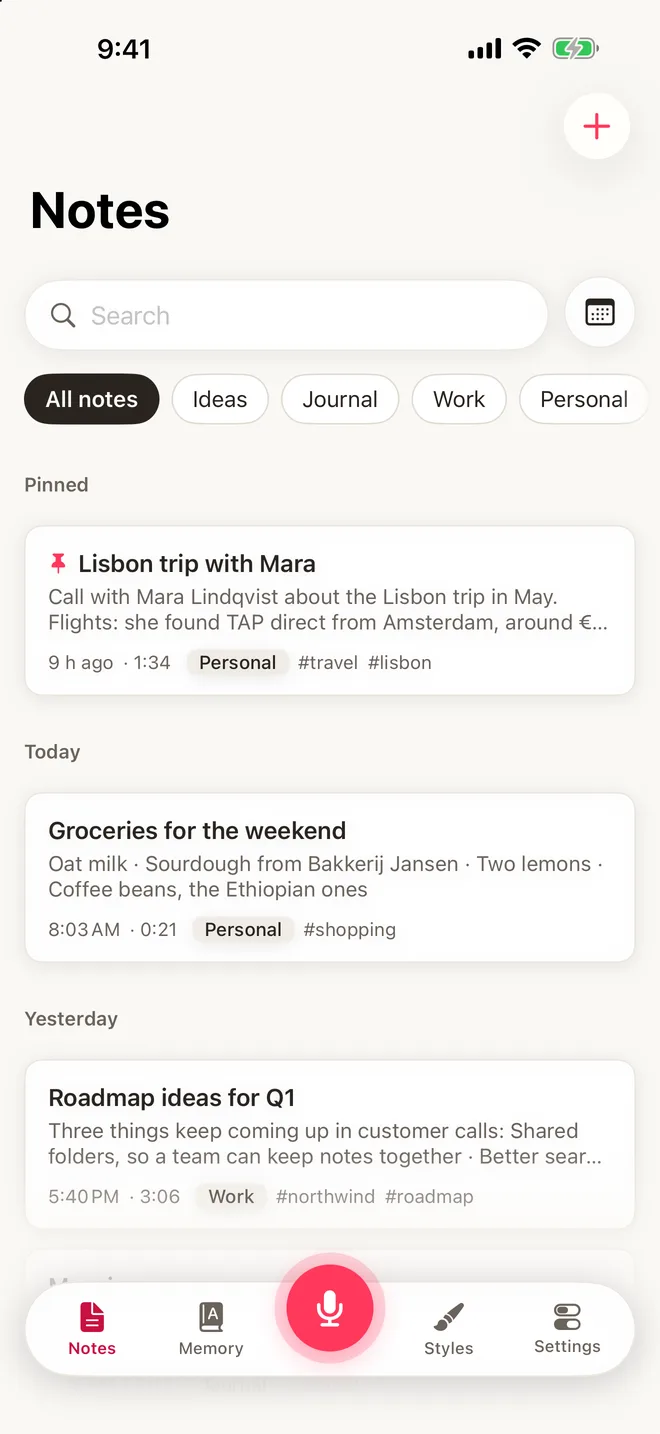
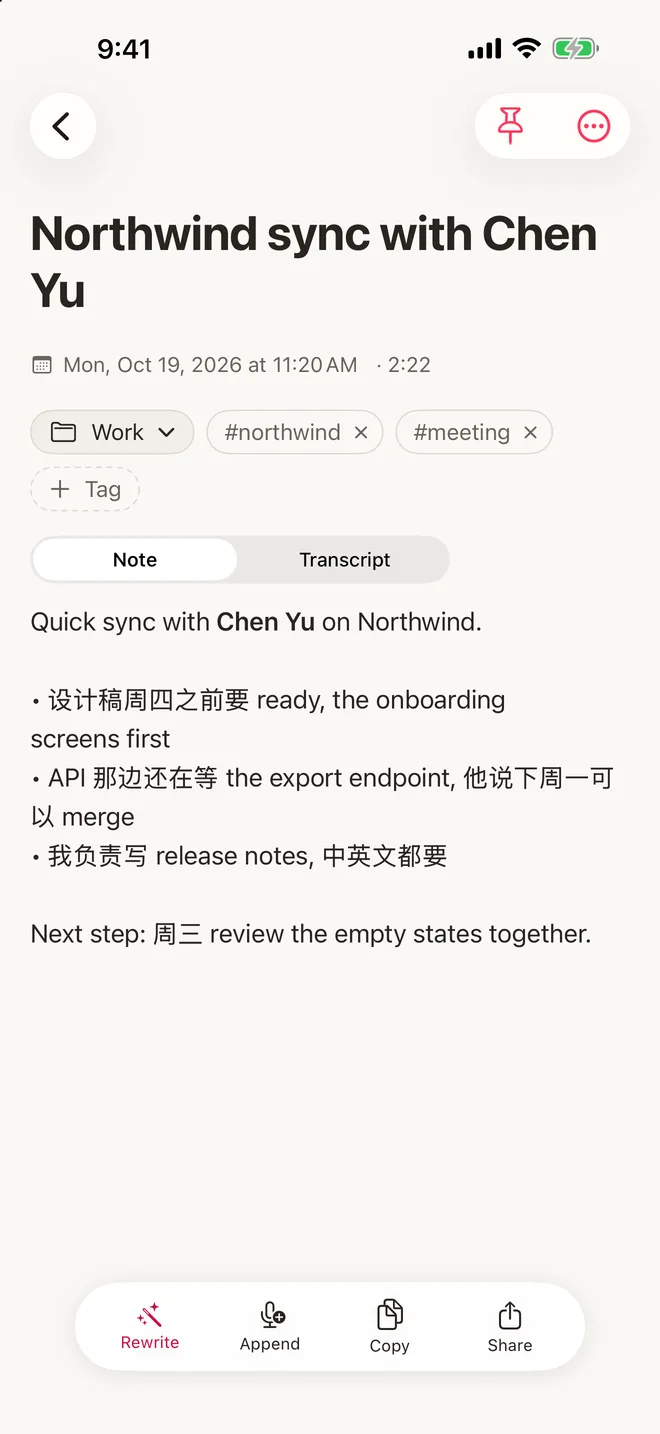
Thinkdown is a voice notes app for people who think out loud. Tap and talk, as messy as you like. When you stop, you get a clean, titled note in your own words, with your corrections kept and to-dos as a checklist.
Notes are filed and searchable, and the calendar shows what you thought about each day. That makes the weekly look-back easy.