 Thinkdown
How to journal by talking (and actually reread it)
Talking is the easiest way to keep a journal. Rereading audio is the hardest. Here is how to get the first without the second.
Plenty of people try voice journaling. They record a few evenings in a row, feel good about it, and stop within two weeks. Talking was never the problem. The problem is what's left afterwards: a folder of audio files nobody wants to sit through.
Why spoken journals get abandoned
A written journal pays you back every time you open it. You skim a page, spot a name, remember a week. Audio doesn't work like that.
- You can't skim it. A six-minute recording takes six minutes to hear. A written entry takes ten seconds to glance at.
- You can't search it. “When did I last talk about the move?” has no answer in a list of files named by date.
- It's awkward. Most people don't enjoy hearing their own voice, ums and all.
6 minutes to hear it again
Priya is moving to Porto
Today was weird. Priya called, and we hadn't talked since March…
10 seconds to skim
So the journal fills up and never gets read, and a journal you never read stops feeling worth keeping.
Why talking is still worth it
Speaking is roughly three times faster than typing for most people. At the end of a long day, that is the difference between two minutes and not at all.
Talking also catches things writing filters out. You ramble, circle back, and say the thing you weren't planning to say. That's often the part worth keeping.
A simple way to do it
- Pick one moment a day. Before bed, on the walk home, or in the car before you go inside. Same time each day beats the perfect time.
- Use three questions. What happened? How did it feel? What do I want to remember? You don't have to answer all three.
- Talk for two minutes and don't edit. Restart sentences, correct yourself, go off on tangents. Polishing while you talk is what makes it feel like work.
- Turn it into text you'll reread. A raw transcript is a wall of words with every um left in. Clean it into a short, titled entry in your own voice.
- Look back once a week. Read the last seven entries on Sunday. This is where journaling starts to pay off.
- Pick a momentBefore bed, or on the walk home
- Three questionsWhat happened, how it felt, what to keep
- Talk two minutesNo editing, no polishing
- Clean entryShort, titled, your words
- Look back weeklySeven entries on Sunday
What a clean entry looks like
Here's a made-up two-minute entry, as it was said, and as a journal entry:
“so, um, today was weird. Priya called, which, like, we haven't talked since March? and she's moving to Lisbon, no, Porto, she said Porto. I was kind of jealous honestly. and then work was just meetings. oh, I want to remember that the new running route by the river is so much better”
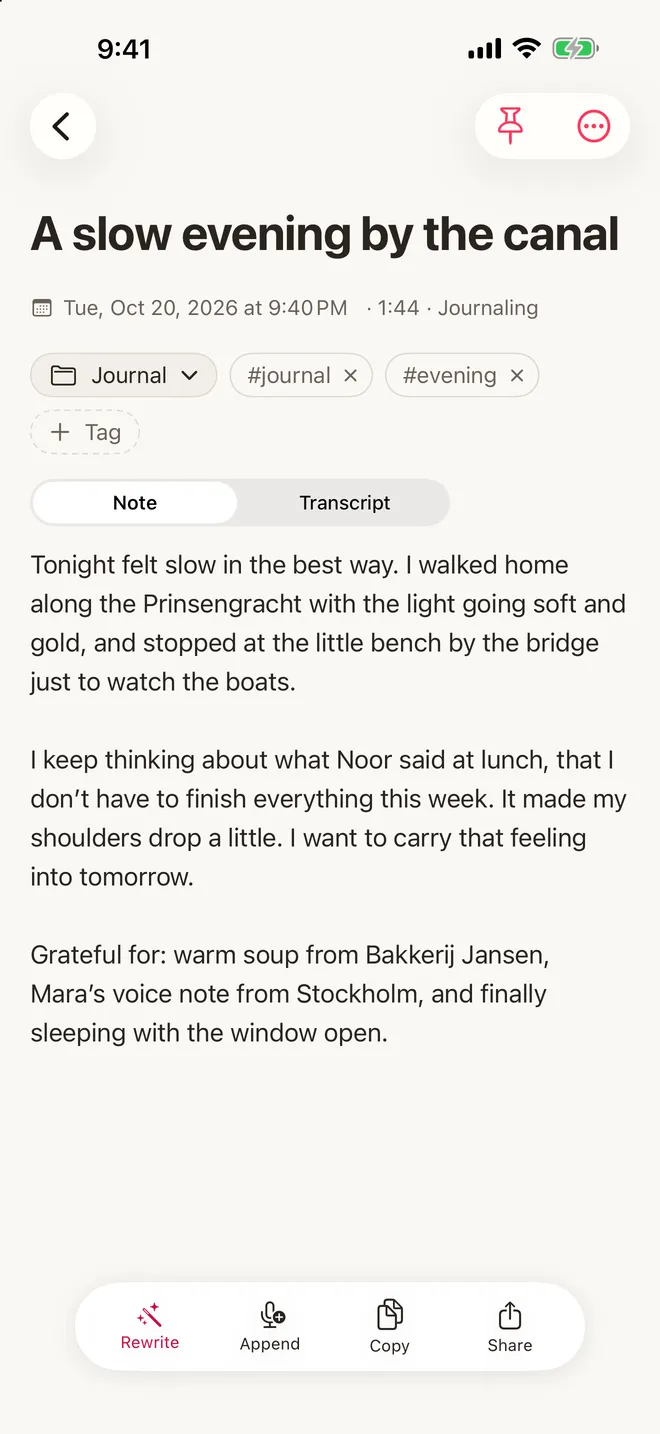
Priya is moving to Porto
Today was weird. Priya called, and we hadn't talked since March. She's moving to Porto, and honestly I was a little jealous. Work was just meetings. The new running route by the river is so much better; I want to remember that.
Nothing was invented and nothing important was dropped. The correction (Lisbon, no, Porto) was kept as what was meant. The feeling stayed in. It now reads in ten seconds, and a search for “Priya” finds it a year from now.
Ten prompts for nights you don't know what to say
- What took up most of my head today?
- Who did I talk to, and what stuck with me?
- What went better than I expected?
- What annoyed me, and is it still annoying me?
- What did I learn, even something small?
- What am I looking forward to this week?
- What would I tell myself from this morning?
- What did I put off, and why?
- What's one thing I want to remember from today in a year?
- How am I, honestly, out of ten?
Make the weekly look-back easy
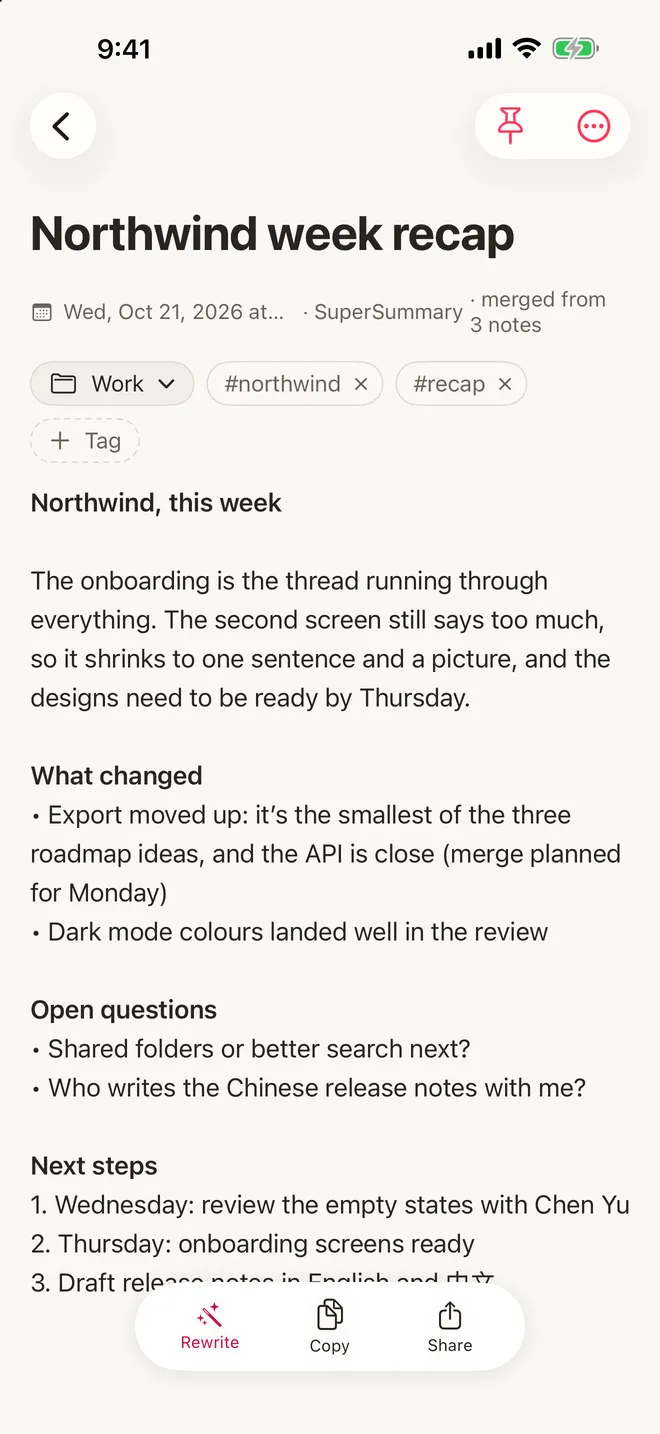
Seven short entries are easy to read in one sitting. Look for patterns: the same worry three nights running, a person who keeps coming up, a good day you'd forgotten already. If you want, write one line at the end of the week summing it up. That line is often the most useful thing in the whole journal.
A week of deadline worry, then relief
The deadline took up Wednesday and Thursday, and shipping on Friday felt great. Priya's news stuck with me. The river route is the new favorite.
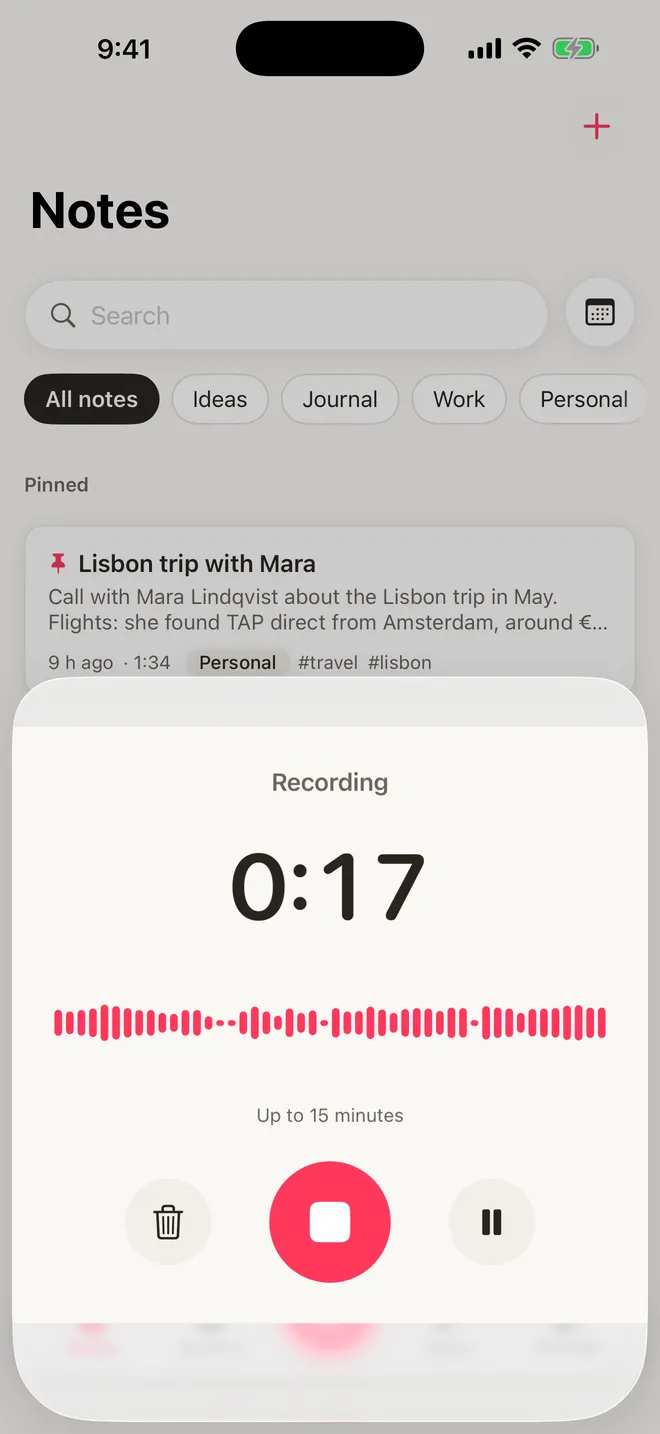
Doing it with Thinkdown
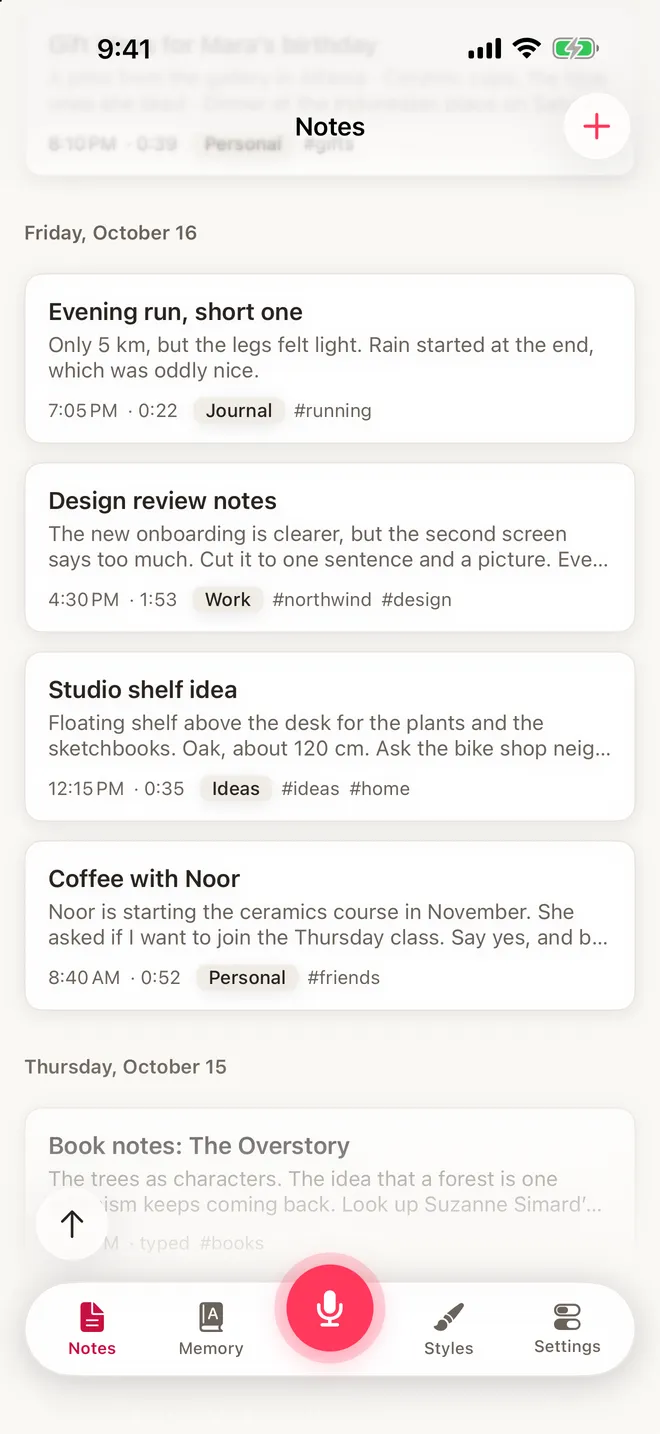
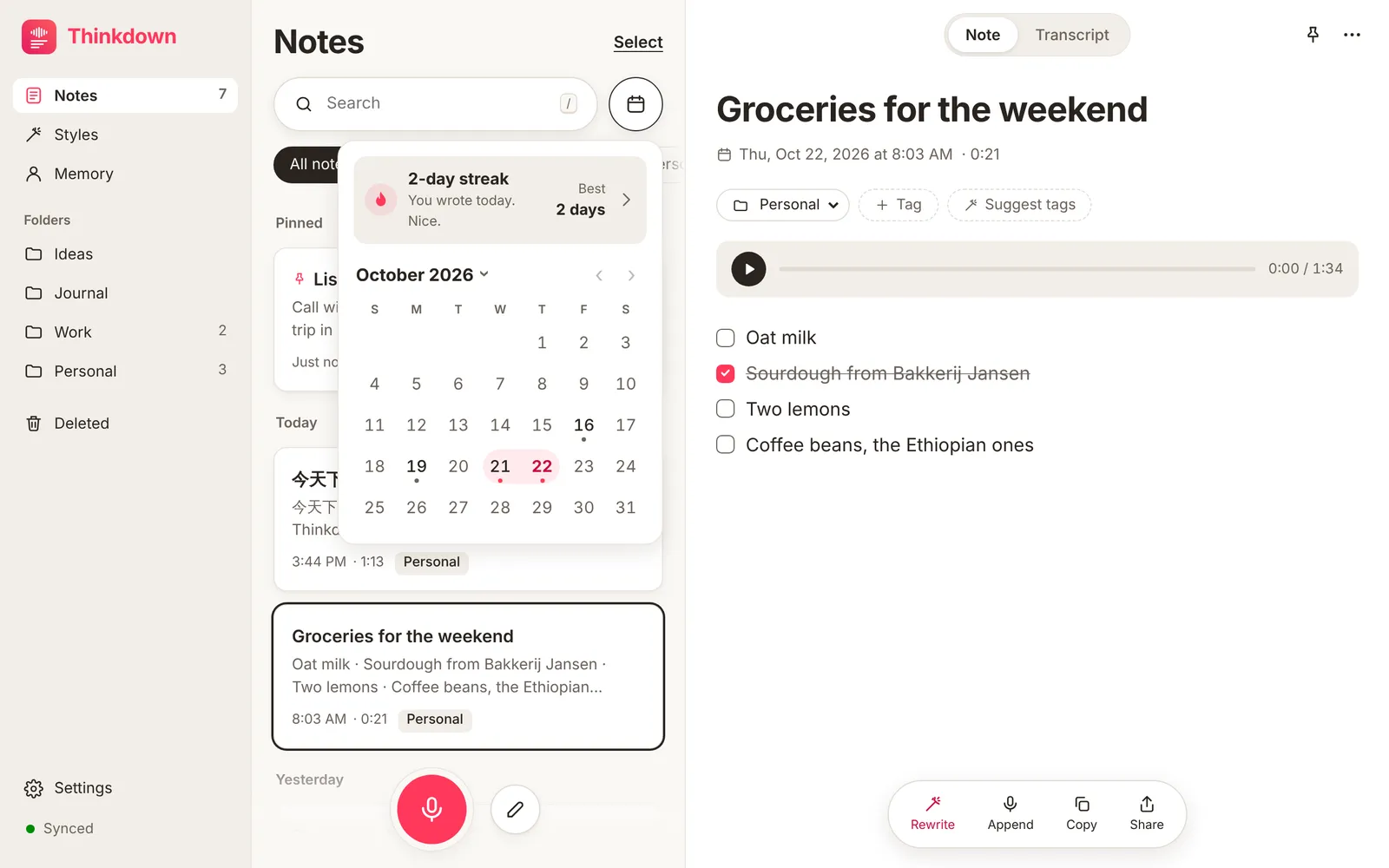
Thinkdown was built for exactly this. Tap record, talk, and the Journaling style writes it up as a dated, titled entry in your own first-person voice. Names you mention are spelled right and remembered. Browse your entries by day in the calendar, or combine a week of entries into one recap. The recording stays with each entry if you ever want to hear the day again.