 Thinkdown
How to remember what you read: a one-minute spoken summary
You finish a good book and a week later can't say why it was good. A one-minute spoken summary after each chapter fixes that.
Why you forget what you read
You finish a good book, an article you loved, a long report for work. A week later you can remember that it was good, but not why. That's normal. Reading feels like learning, but most of it fades within days unless you do something with it.
The fix that works best is also the simplest: say back what you just read, in your own words, right after you read it. Learning researchers call this retrieval practice. You can call it a one-minute spoken summary.
Why saying it beats highlighting
Highlighting feels productive, but it's passive: you're agreeing with the page, not testing yourself. Typing a summary works, but it's slow enough that most people stop after a chapter or two.
Talking sits in the sweet spot. It forces you to pull the idea out of your own head, which is what makes it stick, and it's fast enough to do every time. You also notice gaps right away: the moment you say "and then there was something about..." you know exactly what to reread.
The one-minute summary
Close the book or the tab first. The point is to recall, not to read it out. Then answer four questions out loud:
- What was it about? One or two sentences, as if telling a friend.
- What's the one idea I want to keep? If you could only remember one thing, what is it?
- What surprised me or what do I disagree with? Reactions are memorable. Agreement isn't.
- What will I do with it? A person to tell, a habit to try, a decision it changes. Even "nothing yet" is an answer.
- AboutOne or two sentences
- KeepThe one idea
- ReactSurprise or disagreement
- UseWhat changes
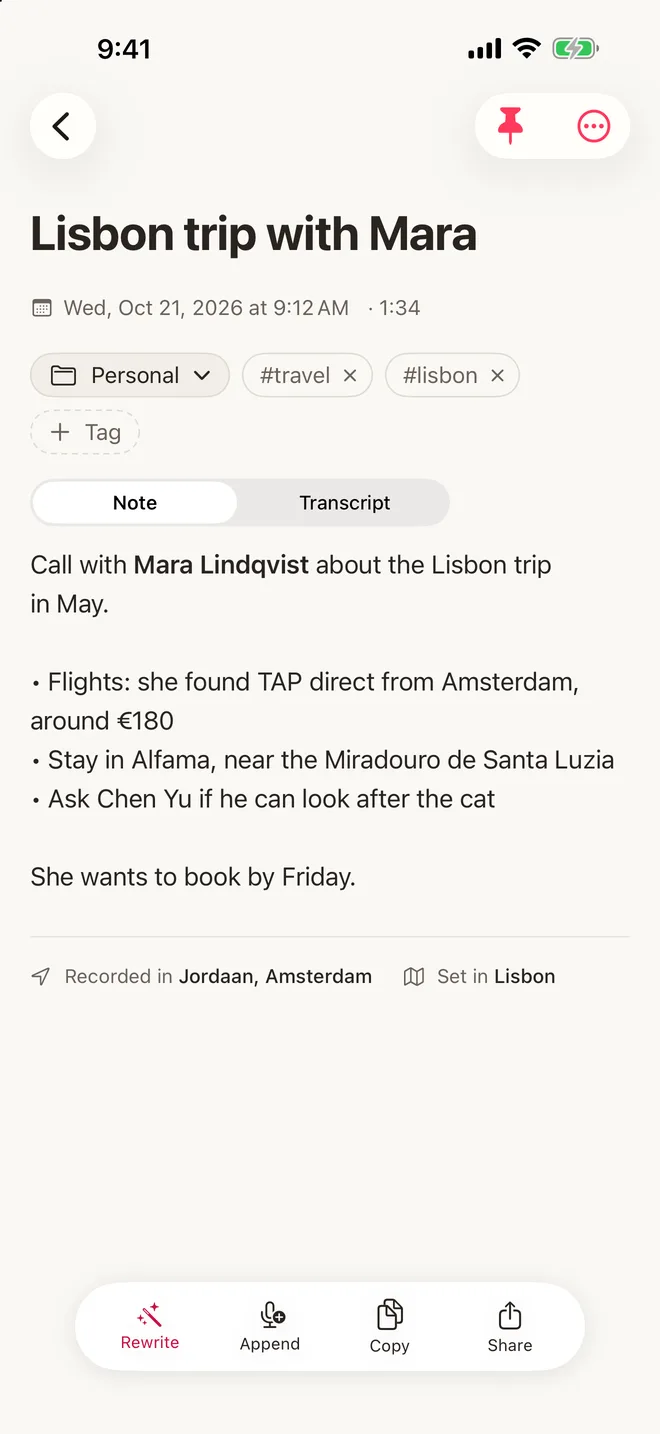
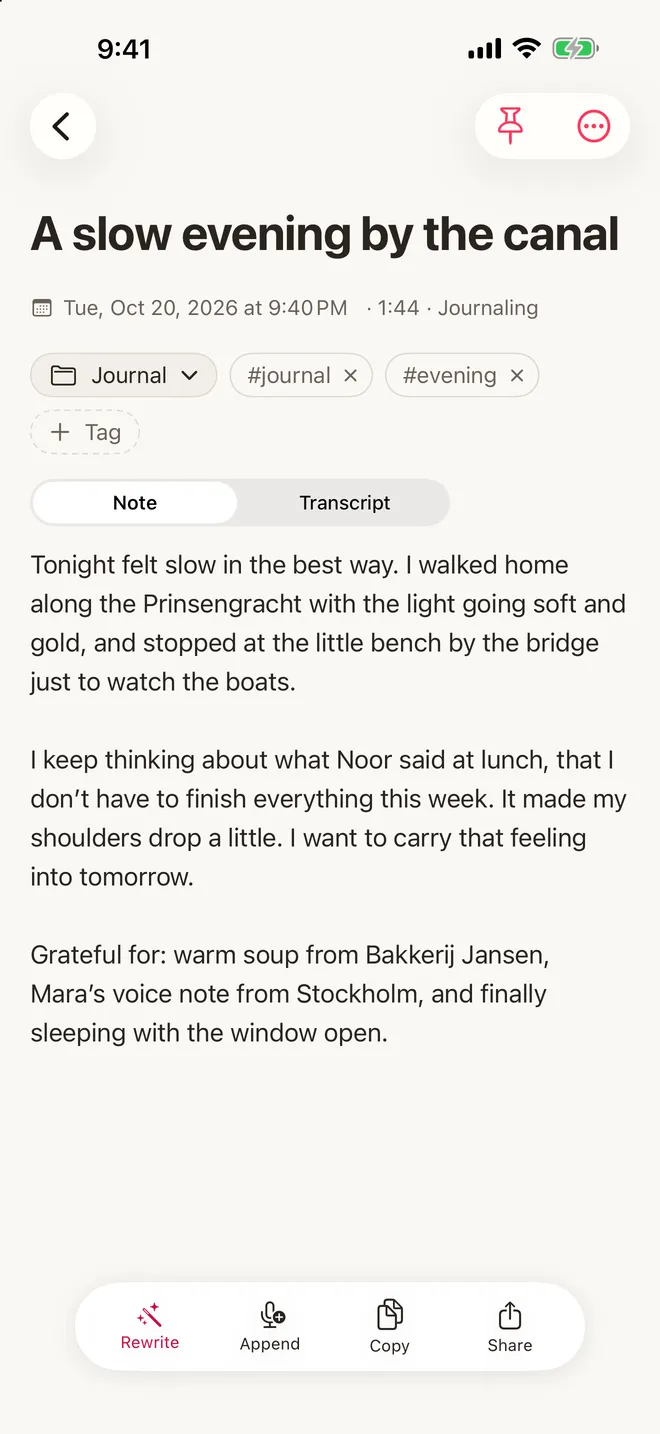
What a spoken summary turns into
You'll ramble the first few times. That's fine. What matters is that the note you get back is short and reads like you.
When to do it
- Books: after each chapter, or each sitting if chapters are long. A finished book then has a dozen short notes instead of none.
- Articles and newsletters: straight after the good ones. Skip the forgettable ones; that's useful information too.
- Work reading: reports, specs, research. Say what it means for your work, not just what it says.
- Podcasts and talks: the same four questions work for anything you listened to. Do it on the walk home.
Make it come back
A summary you never see again still helps, because saying it is what does most of the work. But rereading makes it much stronger. A few light ways to come back:
- Keep all your reading notes in one folder or under one tag, so a book's notes sit together.
- Reread a book's notes when you finish it. Five minutes, and you'll remember the whole book better.
- Ask your notes later. "What did I read about habits?" is a faster way back than flipping through a book.
Do you still need to take notes while reading?
Not really. Underline a line or two if you like, but don't stop every page to write. Read freely, then do the spoken summary at the end of the chapter. Separating reading from recalling keeps both of them better: you stay in the book while you read, and you test yourself properly when you stop. If a single quote matters, snap a photo of the page and add it to the note.
Common mistakes
- Reading the page aloud instead of recalling it. Close the book first, or it isn't practice.
- Summarising everything. One idea you'll keep beats ten you'll forget.
- Waiting until the end of the book. By then the early chapters are gone. Little and often wins.
- Making it a chore. If a chapter didn't land, say that in one sentence and move on.
Doing it with Thinkdown
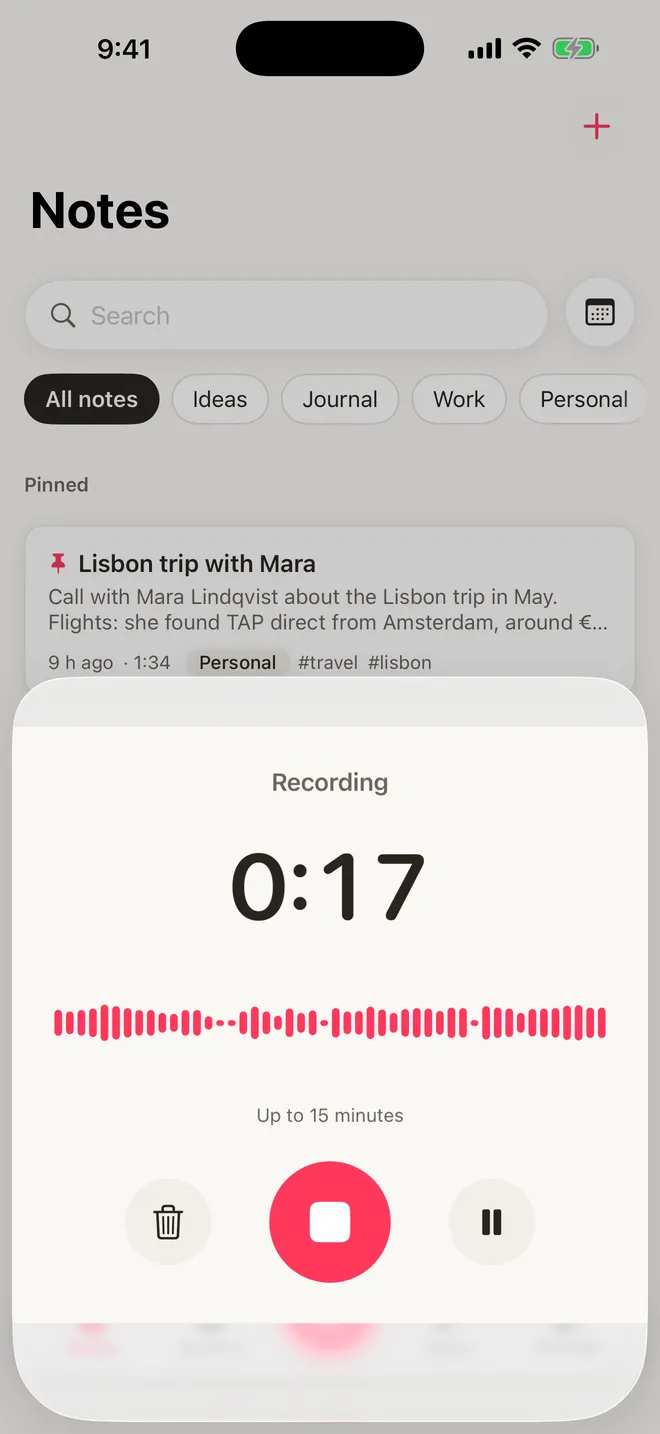
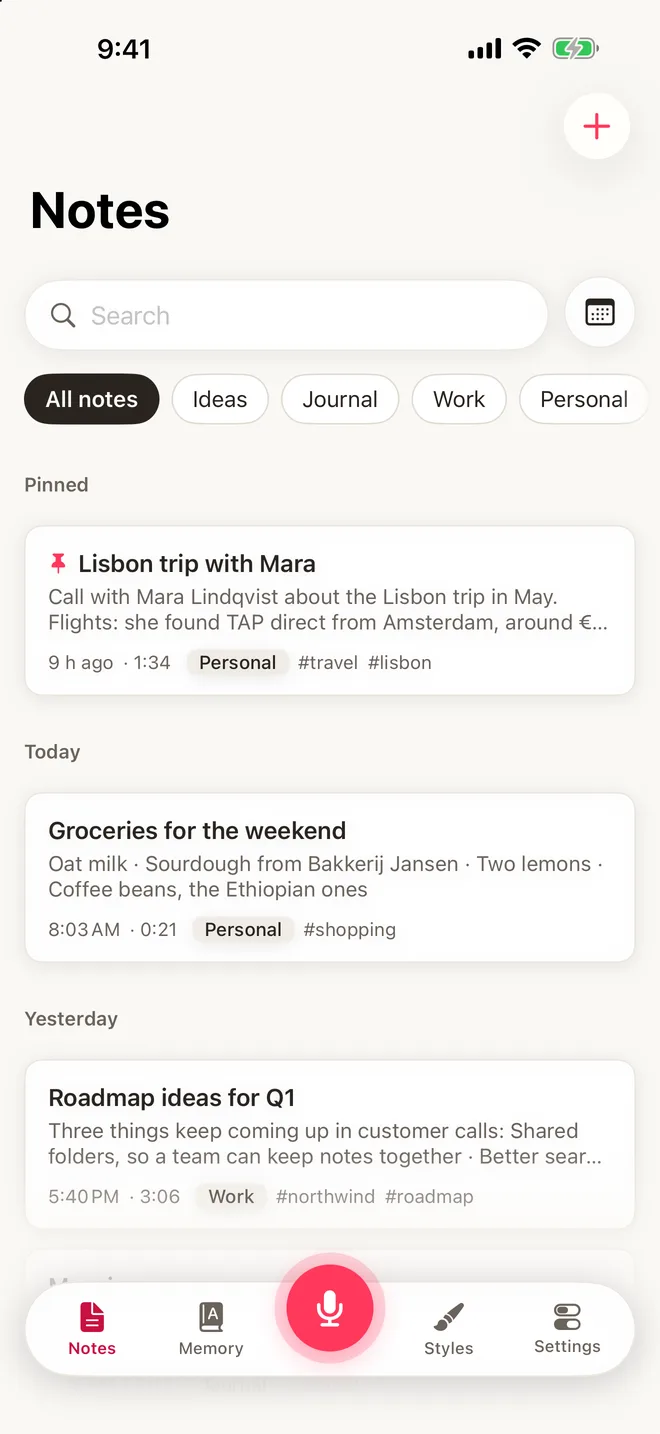
Thinkdown is a journal and notes app you talk to. Close the book, tap record on iPhone, iPad, Mac, Apple Watch or the web, and answer the four questions. You get a short titled note in your own words, with the recording kept in case you want to hear exactly what you said.
Put a book's notes in one folder, and later ask your notes a question to find what you read without digging through the pages again.