 Thinkdown
How to plan your day out loud in two minutes
Skip the to-do list shuffle. Say your day out loud, answer five quick prompts, and get a short plan you'll actually follow.
Why say your plan instead of writing it
Most morning plans fail before they start. You open a to-do app, stare at yesterday's leftovers, and spend ten minutes reordering a list instead of deciding anything. Talking is faster. When you say your day out loud, you naturally put things in order, notice what doesn't fit, and drop what doesn't matter, because you can hear yourself making excuses.
Two minutes of talking, done well, gives you a short plan you'll actually follow. Here's a simple way to do it.
The two-minute routine
Do this before you open email or chat. Coffee in hand is fine. Walking to the train is better.
- Say what today is for. One sentence. "Today is for finishing the budget draft." If you can't say it, that's your first job.
- Name the three things that would make today good. Not ten. Three. Say them in the order you'll do them.
- Say what's fixed. Meetings, pickups, appointments. The plan has to fit around them.
- Say what you're not doing today. This is the step people skip, and it's the one that saves the day.
- Say the first small step. "Open the budget sheet and fill in March." Something you can start in under a minute.
- What today is forOne sentence
- Three thingsIn the order you'll do them
- Fixed timesMeetings, pickups
- Not todaySay it out loud
- First stepUnder a minute to start
What it sounds like, and what you get
You don't need to speak in tidy sentences. Ramble, change your mind, go back. A good voice notes app turns that into a short plan with a checklist.
☐ Budget draft, starting with March
☐ Call the plumber
☐ Pick up Lena at 4:30
Not today: the slide deck (Thursday).
Tips that make it stick
- Same time, same place. Tie it to something you already do: the first coffee, the walk to the car, the elevator up.
- Three things, not ten. If you list ten, you'll do the easy seven and feel bad about the three that mattered.
- Say the "not today" list out loud. Hearing yourself drop something makes it easier to actually let it go.
- Keep it under two minutes. Longer than that and you're working, not planning. Stop and start the first step.
- Glance at it at lunch. Reread the plan once mid-day. Tick what's done and move one thing if you need to.
End the day with thirty seconds
The plan works better when it has a matching close. Before you finish work, record one more short note: what got done, what moved, and the one thing tomorrow should start with. Tomorrow's two minutes then begin with a head start instead of a blank page.
Over a week, these notes add up to something useful: a plain record of what you actually spent your days on. That's the raw material for a weekly review you can do out loud.
What if the day falls apart?
Some days will. A sick kid, a fire at work, a meeting that eats the afternoon. When it happens, don't throw the plan away. Take thirty seconds, say what changed and which one of the three things still matters most, and do that. A plan you adjust out loud is still a plan; a plan you abandon in silence is just a list you'll feel bad about tonight.
Common mistakes
- Planning in your inbox. Email decides your day for you. Plan first, then open it.
- Saying tasks without an order. "Budget, plumber, deck" isn't a plan. "Budget first, plumber at lunch" is.
- Skipping the fixed times. A plan that ignores the 2 PM meeting falls apart at 1:55.
- Re-planning all day. One plan in the morning, one glance at lunch. More than that is procrastination with extra steps.
Doing it with Thinkdown
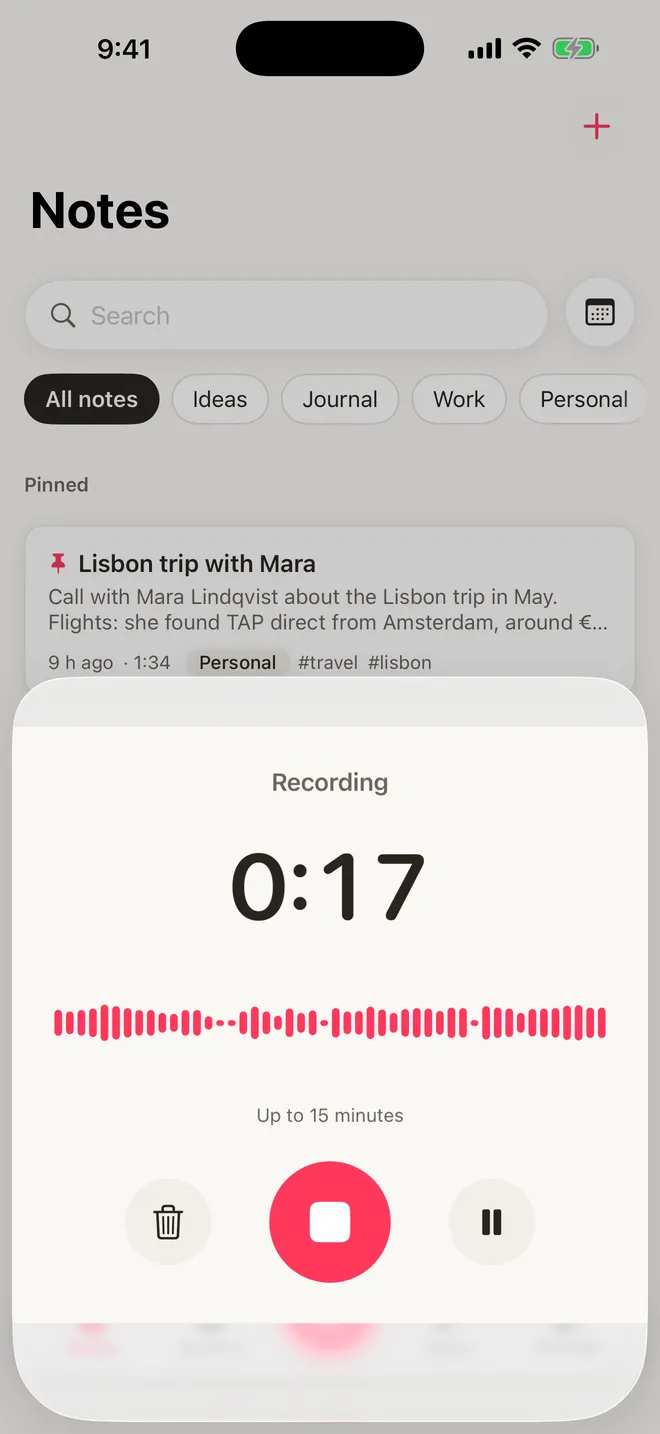
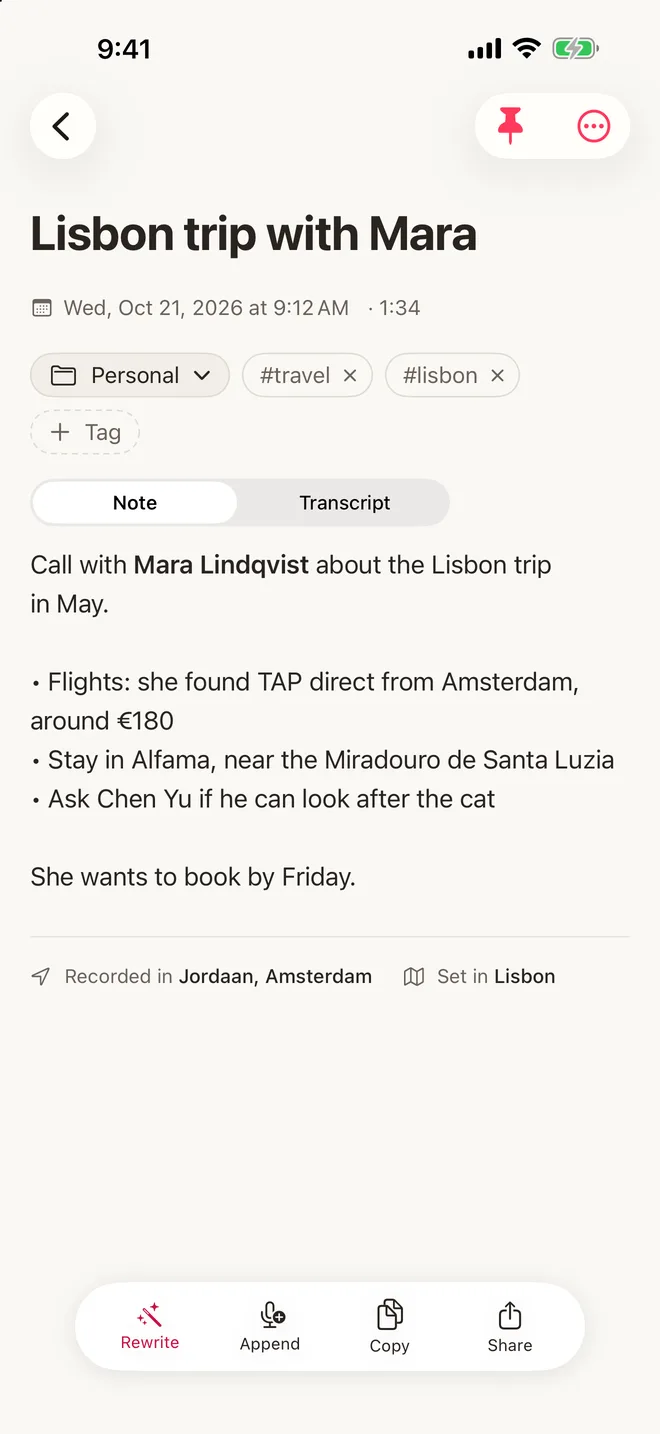
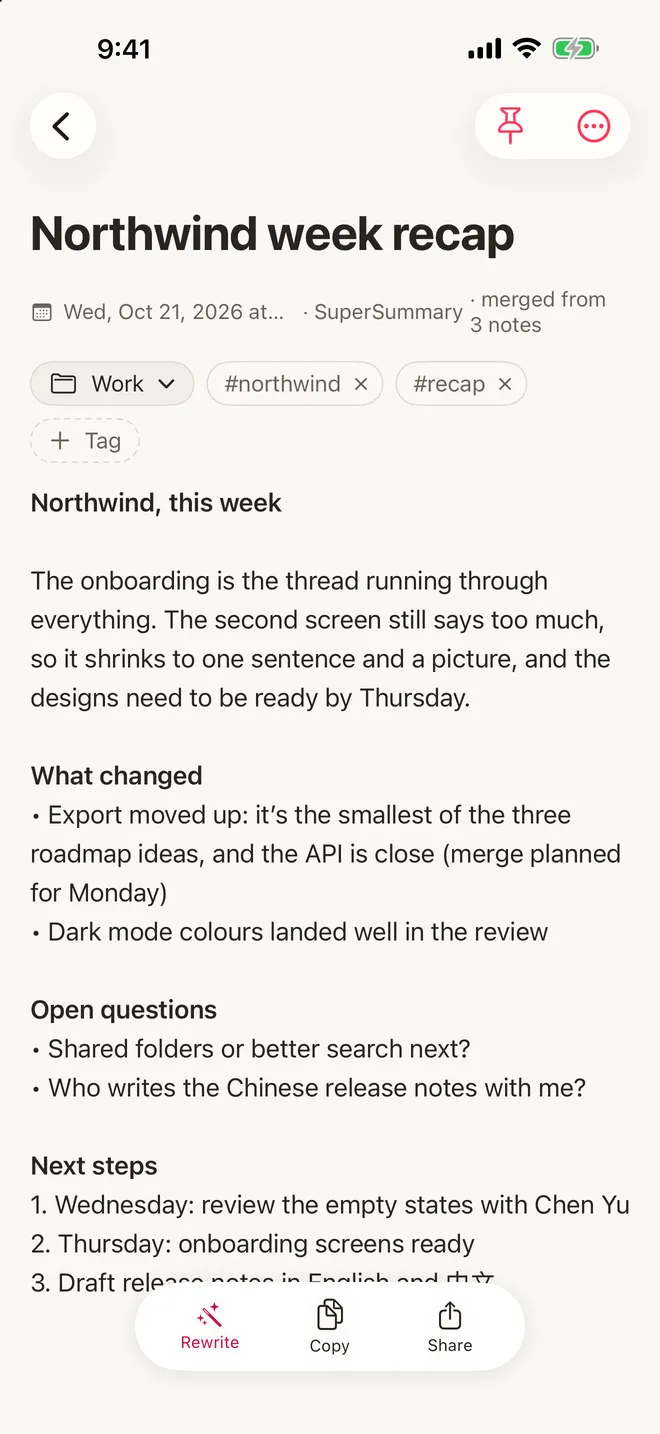
Thinkdown is a journal and notes app you talk to. Tap record on iPhone, iPad, Mac, Apple Watch or the web, say your plan, and you get a short titled note with your to-dos as a checklist you can tick off during the day. Names and places come out spelled the way you taught it.
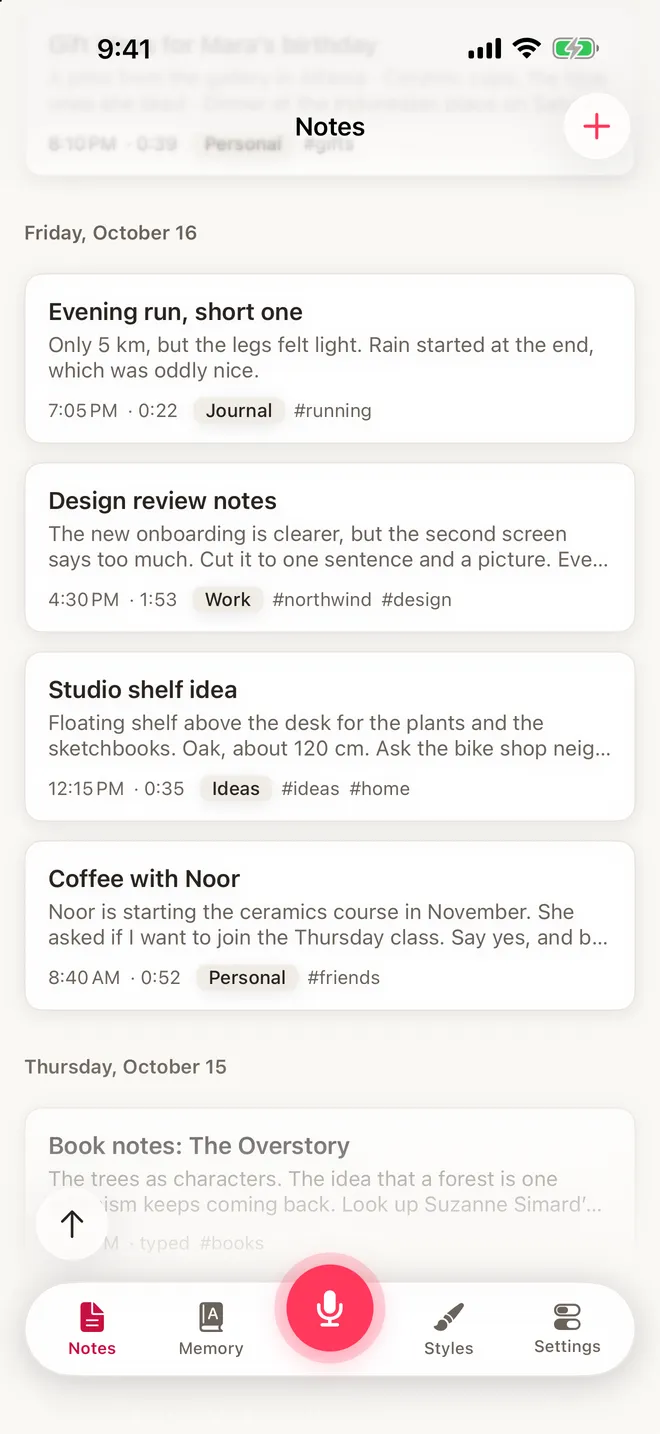
Your morning plan and evening wrap-up sit on the same day in the calendar, so a week of them reads like a log. When Friday comes, you can ask your notes what you actually got done.