 Thinkdown
How to combine many short notes into one plan
To turn a pile of short notes into a plan, gather the ones on a single topic and merge them into one new note: the threads that keep coming up, what changed along the way, what's still open, and what to do next. Keep the originals as they were.
Short notes are great for catching things. Thirty seconds in the car, a line on a walk, a thought before bed. The trouble starts a week later, when the thing you've been noticing is spread across nine notes and none of them is the plan. Combining them isn't the same as stapling them together. A useful combined note does four things the separate notes can't, and the steps below show how to get there.
Why do short notes pile up instead of becoming a plan?
Each note is written for the moment it was recorded. It doesn't know about the note before it or the one after. So you end up with:
- Repeats. The same worry, said three different ways on three different days.
- Contradictions. Tuesday's “probably yes” and Thursday's “actually, no” both sit there looking equally true.
- Loose ends. Questions you asked yourself and never came back to.
Reading all of them in order every time you want to act is exactly the job you were hoping to avoid.
What should a combined note actually contain?
Most people's first instinct is a summary: one line per note, top to bottom. That's just a shorter pile. A combined note is more useful when it's organized by what matters, not by date:
- Common threads. What keeps coming up, said once.
- What changed. Where you changed your mind, and the decision you landed on.
- Open questions. Things still unresolved, so they don't get lost.
- Next steps. What to actually do, as a checklist.
The second one is the part most tools and most people skip. If a note says “buy a used wheel” and a later one says “no, buy it new”, the plan should say “new”, and say that it changed. Otherwise you'll reread the old note in a month and second-guess yourself.
How to combine notes into a plan, step by step
1. Pick the notes on one topic
Three to ten notes is the sweet spot. Fewer and there's nothing to combine. Many more and you're probably mixing topics. Tags and a search for the project's name make this quick.
2. Leave out the ones that don't belong
A note that mentions the project in passing but is really about something else will muddy the result. Be strict. You can always run it again.
3. Combine into a new note, not over the old ones
The originals are your record of how you got here. Keep them. The combined note is a new note that points back to where it came from.
4. Check the “what changed” part against the originals
This is the one place to slow down. Make sure the decision it landed on is the one you actually made last, not the first one you said.
5. Reshape it for whoever needs it
The plan for you might be a list. The version for the person helping you might be an email. Same content, different shape.
A made-up example: a garage becomes a pottery studio
Tomás has been thinking about turning his garage into a small pottery studio. Over a week he records a note most days, wherever he happens to be:
Garage pottery studio: the plan so far
What keeps coming up: power and air. The kiln needs its own 240V line, and venting the fumes is the part I'm least sure about. The space is 3.1 × 5.4 m, enough for a wheel, a kiln and two shelving units.
What changed: I was going to buy a used wheel, but on Thursday I decided to buy new, for the warranty.
Still open: Does the kiln need a hood, or is a window fan enough? Where does the kiln go so it's away from the shelves?
- Ask Gwen for her electrician's number and get a quote
- Pick up the spare shelving from Gwen
- Read the kiln manual's section on ventilation
Two things to notice. Gwen shows up in two separate notes, once for the electrician and once for the shelving. In the plan she becomes two to-dos he can do in one visit. And the Sunday worry about fumes, which felt like a stray thought at the time, turns out to be the biggest open question.
None of that was new information. It was all in the notes. It just wasn't visible until they were read together.
When shouldn't you combine notes?
- The notes are about different things. A week of everything isn't a plan. Combine by topic, not by date, unless you want a weekly recap.
- You need the exact words. For a record of what someone said, keep the originals and the recordings. A combined note is a rewrite.
- It's one long note already. If it's a single fifteen-minute ramble, rewrite it in a clearer style instead.
Habits that make combining work better
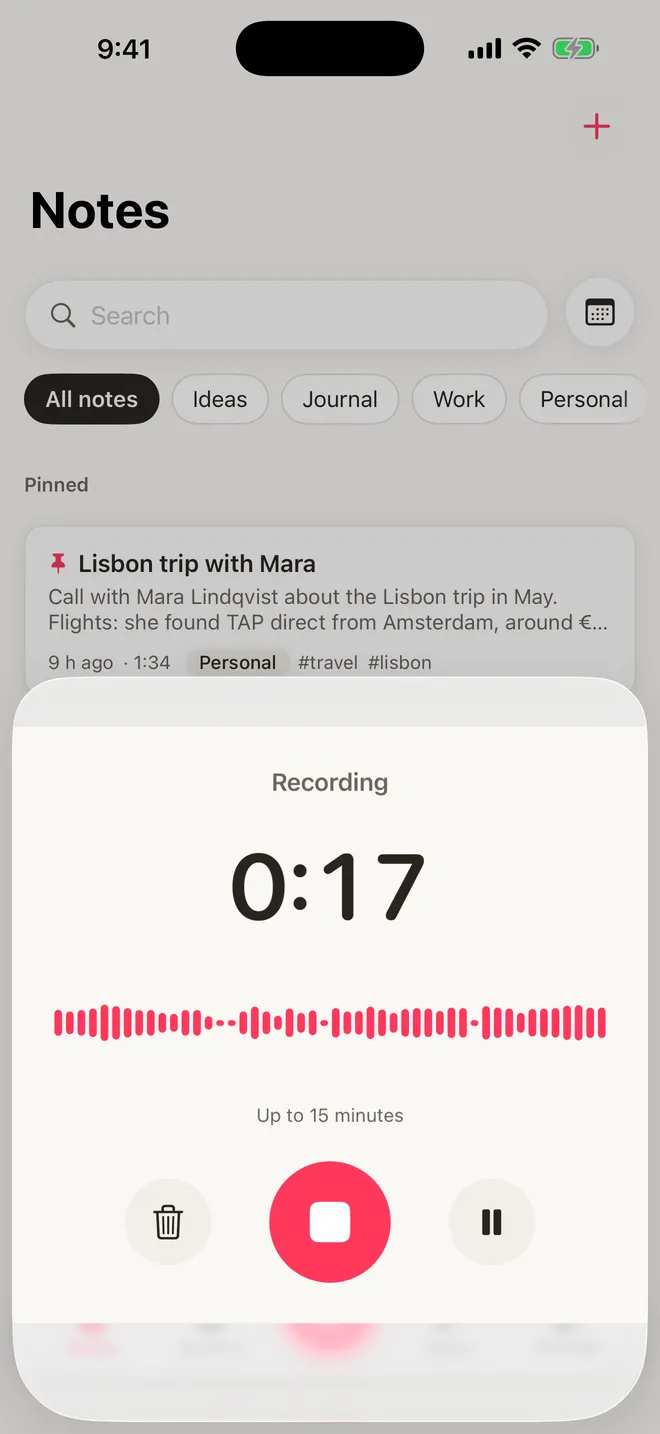
- One topic per recording. If you switch topics, stop and start a new note. It costs a tap and saves a mess later.
- Say it when you change your mind. “I've changed my mind about the wheel” is much easier to pick up than a quiet contradiction.
- Say the why. “New, for the warranty” is worth more in a plan than “new”.
- Use the same name for the project every time. “The studio”, not “the garage thing” on Monday and “pottery” on Friday. It makes the notes easy to find and group.
Doing it with Thinkdown
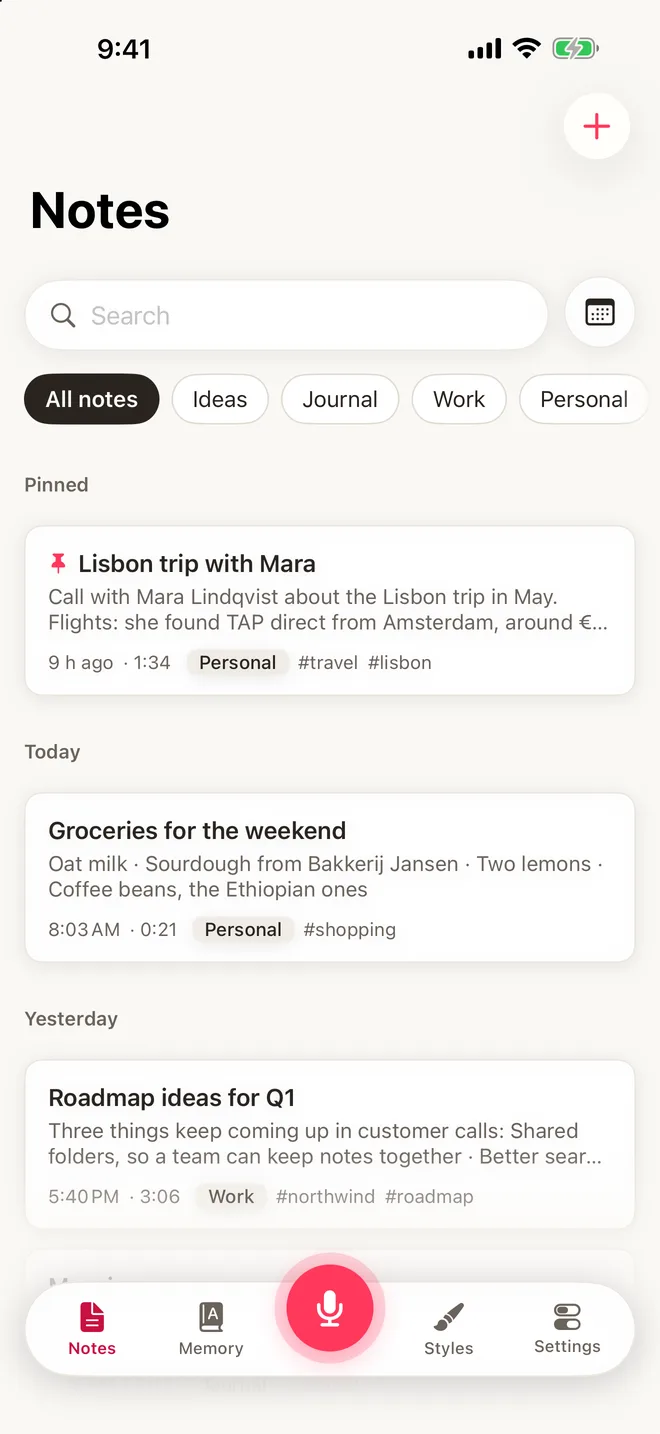
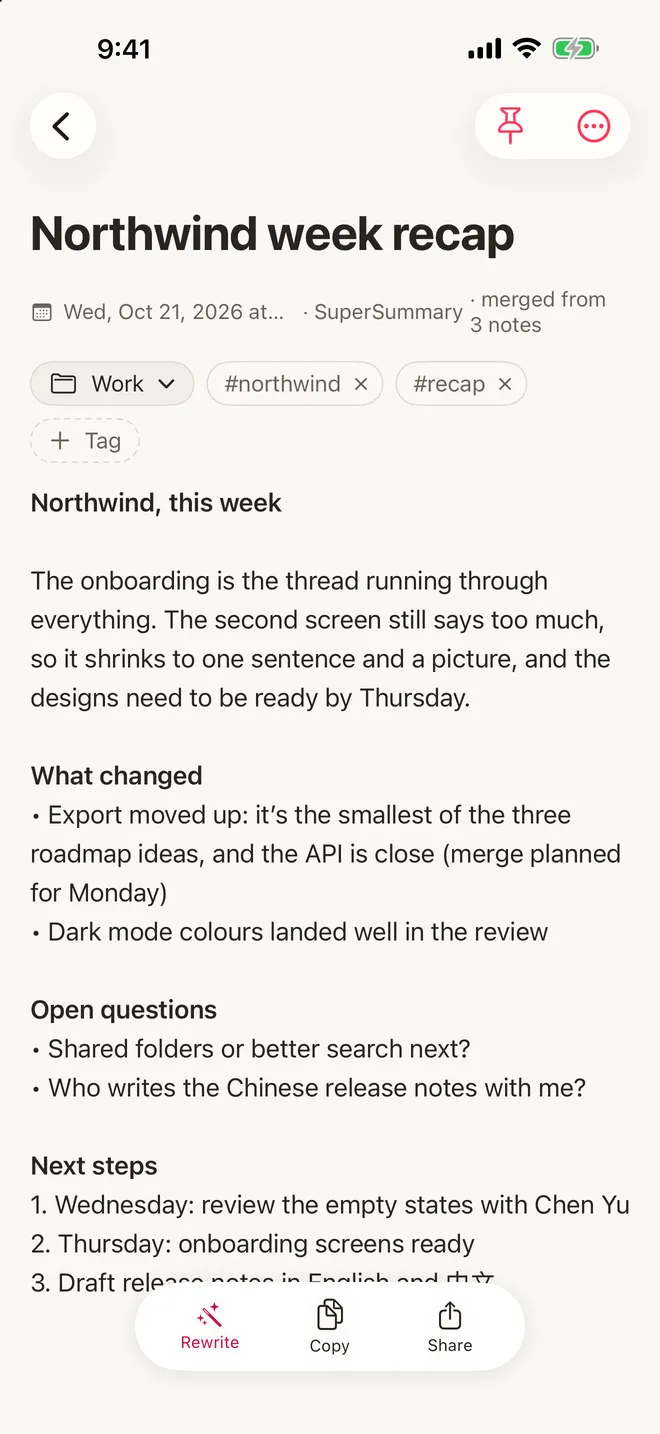
In Thinkdown, select the notes you want and combine them. You get one new note with the common threads, what changed over time, open questions and next steps, marked with how many notes it came from. The originals stay as they were.
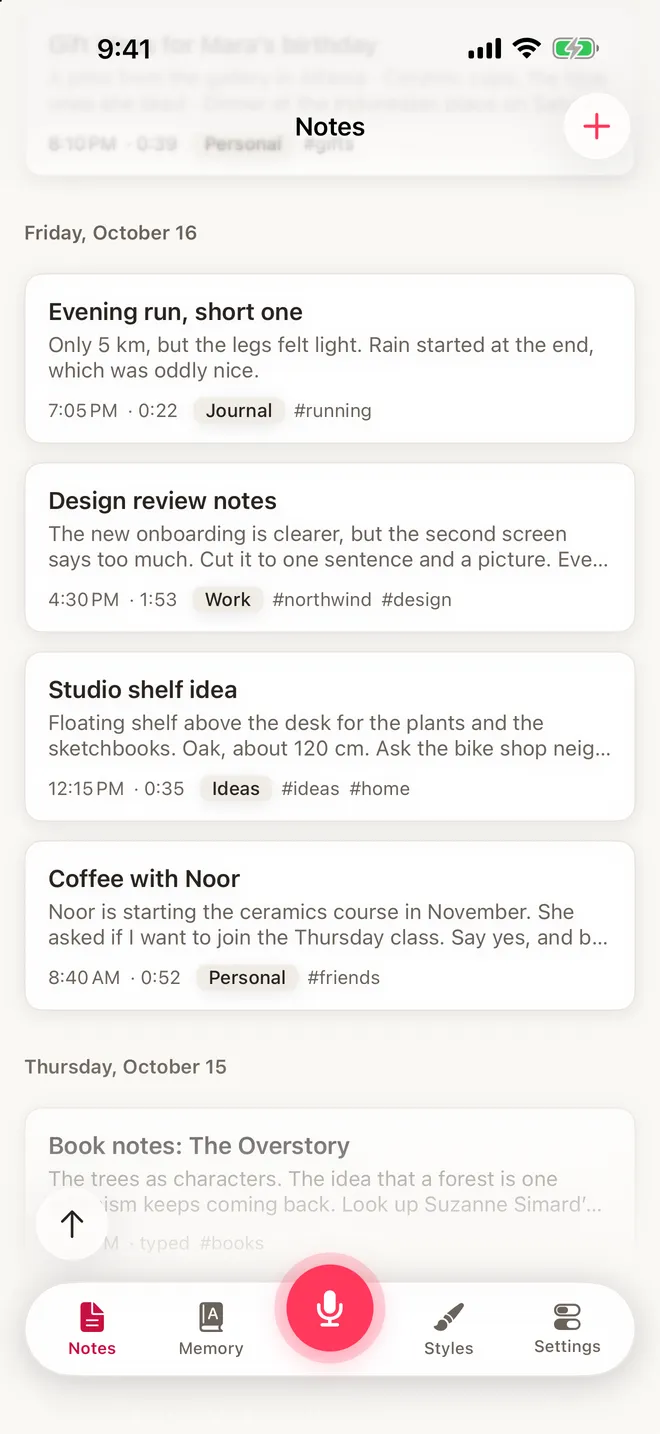
Like any note, the combined one can be rewritten in another style, such as an email to the person helping you, and every version is kept. Notes are tagged as you go, so finding a week of notes on one project is a search away.